
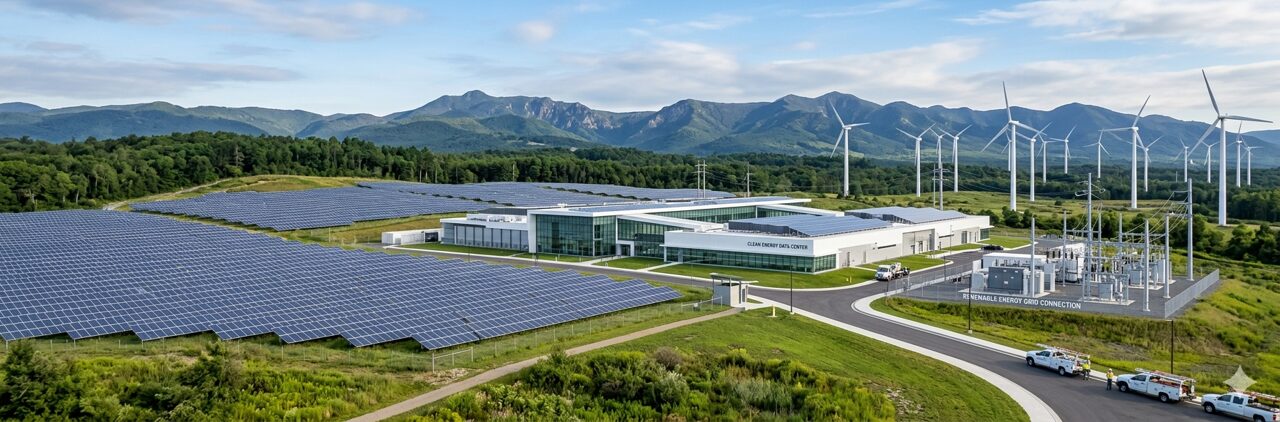
The rapid boom in AI is fueling unprecedented growth in data centers, unlocking significant new investment opportunities across the world. Yet this surge also brings escalating energy demand that the region’s energy infrastructure is not yet prepared to support. This creates an opportunity for investors to back innovations that will enable data centers to serve the increased demand from the tech sector while scaling responsibly from both a fiscal and environmental perspective. This article will touch on some of the trends driving growth in Southeast Asian data centers, as well as the challenges and technologies that present a massive investment opportunity for venture capital investors.
How is AI Affecting the Energy Sector in Southeast Asia?
In the past year, AI applications have entered the mass market and taken hold of public consciousness. With this boom in AI usage comes increased strain on global energy demand from data centers. Experts forecast that the worldwide energy demand from data centers is expected to double by 2030, hitting up to 945 TWh[1]. In Southeast Asia, energy demand growth from data centers is expected to quadruple as the region looks to leverage cheap energy and operating costs to attract investment into data centers. Compared to developed markets, SEA has on average 20% lower construction and operations costs for data centers. Thailand and Malaysia in particular are expected to emerge as key hubs within the region if they can blend competitive energy costs (relative to Singapore, the current SEA leader in data centers) with improved energy infrastructure and stability.
Thailand’s Board of Investment is rapidly accelerating investment into data center projects, with $21 billion of applications approved in 2025 alone, 90% of which are concentrated in the Thailand’s Eastern Economic Corridor (EEC) region.[2] Major global tech players have also committed significant capital to the Thai market, including Google, Microsoft, TikTok, and AWS.
What Challenges Does Data Center Growth Present?
While the growing demand for data centers presents a huge economic opportunity for the region, it also presents a massive challenge for the region’s energy infrastructure and a need to accelerate deployment of renewable energy resources. As data centers look to increase their load capacity to cope with the demands of AI, there is also increased strain on transmission infrastructure. New facilities are being designed to handle over 4x the load of older data centers (growing from 24 MW to 106 MW).[3] Data centers are often clustered in the same area, often close to urban centers; apart from generally increased power demand, data centers also create problems for the grid in these clusters due to spikes in demand. The power draw from a hyperscale data center could swing from 50 to 100 MW in the span of a couple seconds; existing grid infrastructure simply isn’t able to handle that kind of swing, creating a need for data centers to find alternative energy sources or buffers to manage the spike.
Further, the recent conflict in the Middle East has served to highlight the difficulty data centers in Southeast Asia may face in ensuring constant energy supply. The hostilities have resulted in the closure of the Strait of Hormuz, through which Thailand imports a significant amount of LNG (the main fuel powering Thailand’s electrical grid). This interruption in supply has resulted in rising costs for both fuel and electricity, and in aggressive energy-saving measures from the Thai government. Such geopolitical disruptions underscore the need for not only nations to secure their energy supply, but for private companies like data center operators to maintain independent sources of energy.
To better serve the growing demand (not just from AI applications, but also increasing demand from the financial services sector to drive digital payments and online transactions), data centers are adopting higher density server racks and chips, which comes with higher cooling requirements. The bulk of data center operating costs comes from energy usage, which is primarily comprised of servers (40-60%) and cooling (30-40%).[4]
What Sectors Should Investors Be Considering?
While the challenges in the region’s grid infrastructure also present an opportunity for investment in grid technologies, the more immediate solution for data centers lies in alternative energy sources and energy efficiency technologies. Renewables are expected to play a large role in increasing the energy supply for data centers, though they come with the typical challenges: intermittency, predictability, and space constraints. While data centers cannot run on solar alone (peak AI loads draw more power than can be supplied by current solar panel technology), solar represents one of the cheapest sources of energy for a data center, and can be deployed significantly faster than any alternative clean energy technology. Regardless, major tech companies are already racing to invest in solar capacity to power their data centers, including Microsoft (which added 860 MW of new capacity in 2024) and Amazon (which has 13.6 GW of solar capacity under development).[5]
Other sources of clean energy that may be beneficial to data centers include nuclear energy and solid-oxide fuel cells (SOFCs). Both these energy technologies have the capacity to operate 24/7 and come with predictable maintenance and refueling cycles, ideal for use at data centers that require 100% up-time. From an investment perspective however, the upfront costs are significantly higher than solar, and nuclear reactors in particular have extremely long deployment timelines. SOFCs may be an emerging area of interest as they are more compact and easier to deploy than alternative solutions. While SOFCs are not currently carbon neutral (most SOFCs are fueled by natural gas), researchers are evaluating the use of alternative fuels, such as biogas, which would further reduce the emissions from the operation of SOFCs. Even without alternative fuels, SOFCs can still offer significant emissions reductions compared to reliance on the energy grid, which in many countries is primarily powered by coal. Startups like Bloom Energy and ATE are already working with EGCO to bring SOFC technology to Thailand.[6]
In addition to securing new, clean sources of energy, data center operators can also generate significant cost and emissions savings through energy efficiency technology. There are wide varieties of energy efficiency plays, from layout optimization during the design phase, which can minimize hotspots and improve cooling flow within the data center to reduce energy consumption from cooling, to advanced cooling technology like direct-to-chip cooling that may use less energy than traditional air cooling systems (studies show this could reduce total facility energy usage by up to 40%)[7], or even digital twins for modeling, forecasting, optimizing, and automating the data center’s workload to minimize costs and wasted energy. Startups like Phaidra and NexDCCool leverage agentic AI to monitor conditions in the data center and autonomously adjust cooling infrastructure to cut energy consumption.
Conclusion
While Thailand has a huge opportunity to benefit from the increased demand and growth in the data center market, investment in clean energy and energy efficiency technology is vital for local operators to capitalize on the opportunity. While grid modernization may occur as a result of cooperation between policy makers, technology innovators, and energy conglomerates, data center operators can focus on ensuring they can maintain operations independent of the pace of grid infrastructure improvement. Energy represents the main on-going cost for data center operators, and by adopting technology that minimizes both energy usage and waste, operators can maintain cost-competitiveness. For Beacon VC, this represents a compelling opportunity to back technologies that not only reduce operational risk and costs, but also ensures that we can help shape a future where the growth of AI and the digital economy does not come at the expense of greater carbon emissions and environmental problems that may wreak havoc on the Southeast Asian region.
Authors: Krongkamol (Joy) deLeon, Thapanawit (Ping) Janthra
Editor: Woraphot (Ping) Kingkawkantong
Sources:
These four charts sum up the state of AI and energy | MIT Technology Review
Southeast Asian data-centre power demand is set to explode | Wood Mackenzie
From AI to emissions: Aligning ASEAN’s digital growth with energy transition goals | Ember
Solar-Powered Data Centers: Why the Forecast Is Only Partly Sunny
Renewable Energy for AI Data Centers: A Complete Guide
The Startups Driving The Shift Towards Green Data Centers – Net Zero Insights
Data Center Energy Consumption Statistics & Data (2026)
Best Practices in Energy-Efficient Data Center Design in 2025 | Keentel
Phaidra cuts data center cooling energy by 25% — and eyes a bigger prize
https://osos.boi.go.th/EN/news/2163/Thailand-BOI-Approves-Investments-Worth-A-Total-of-US5-Bill/
[1] https://www.iea.org/reports/energy-and-ai/executive-summary
[2] https://en.thairath.co.th/money/tech_innovation/tech_companies/2908916
[3] https://www.woodmac.com/news/opinion/southeast-asian-data-centre-power-demand-is-set-to-explode/
[4] https://thenetworkinstallers.com/blog/data-center-energy-consumption-statistics/
[5] https://www.datacenterknowledge.com/energy-power-supply/tech-giants-pour-billions-into-solar-power-as-data-centers-strain-the-grid
[6] https://sustainability.egco.com/en/newsroom/news/28/egco-group-together-with-egat-and-ate-co-ltd-joint-agreement-with-bloom-energy-corporation-usa
[7] https://www.weforum.org/stories/2025/12/data-centres-and-energy-demand/